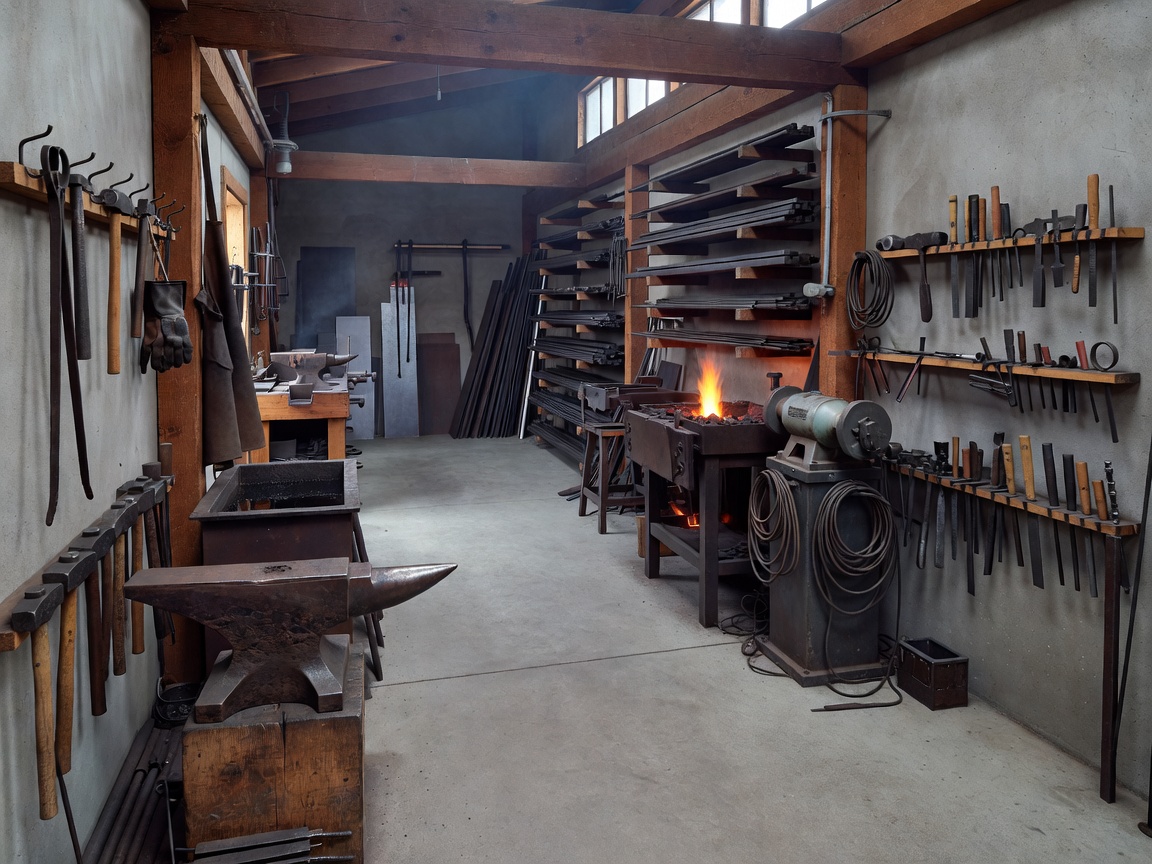
Personal protective equipment is the last layer of defense, not the first. Begin by removing unnecessary hazards, separating hot work from storage and engineering ventilation. Then establish checks that are simple enough to repeat every session.
Create a controlled hot zone
Place the forge, anvil, vise and quench area so hot stock moves along short, predictable paths. No route should cross a doorway or pass behind another person. Allow room for the longest stock to rotate without contacting walls, cylinders, electrical cords or visitors. Mark a boundary that observers do not enter without instruction.
Floors should be noncombustible, level and clear of scale buildup. Hot scale travels farther than expected and can settle in cracks or beneath equipment. Wood, fuel, solvents, paper and oily waste belong outside the hot zone. Provide stable racks where hot steel cannot roll or be mistaken for cold material.
Ventilation and combustion gases
Coal, charcoal, coke and propane all produce carbon monoxide when combustion is incomplete. The gas has no reliable smell or visual warning. A forge requires properly designed fresh-air supply and exhaust to the exterior. An alarm provides an additional warning but cannot make an inadequately ventilated room safe.
Hoods must capture fumes without pulling them through the breathing zone. Inspect chimneys and ducts for obstruction, corrosion and accumulated deposits. Never operate fuel-burning equipment in a sealed garage, even with the main door partly open, unless a competent assessment confirms sufficient ventilation.
Clothing and protective equipment
Wear impact-rated eye protection with side coverage. Add a face shield for grinding or operations that throw scale, while retaining safety glasses beneath it. Hearing protection is appropriate around repeated hammering, power hammers and grinders. Select protection that allows communication and awareness of warnings.
Natural-fiber clothing is generally preferable near sparks because many synthetic fabrics melt against skin. Use long trousers and closed leather footwear; avoid cuffs that collect scale. Gloves can protect during specific handling tasks, but loose or oversized gloves reduce grip and can become entangled in rotating machinery. They do not make hot steel safe to touch.
Fire planning
Choose extinguishers for the hazards present and obtain instruction in their use. A fire involving fuel gas, ordinary combustibles or energized electrical equipment may require different action. Maintain immediate access to the fuel shutoff. If safe control is uncertain, evacuate and contact emergency services rather than attempting to save equipment.
Quench tanks need stable bases and sufficient freeboard to prevent overflow. Oil quenches require a metal lid that can smother flames. Water must not enter hot oil, and wet stock should not be placed in molten salt or other specialized media. Never position a quench tank where a spill can reach the forge.
Grinding, dust and rotating tools
Grinding adds wheel failure, sparks, dust and entanglement risks. Use guards, tool rests and abrasives rated for the machine. Inspect wheels and belts before work. Keep sparks directed away from people, glazing, fuel and accumulated dust. Respiratory protection must be selected for the actual contaminant and should accompany, not replace, extraction.
Secure long hair and remove jewelry. Do not wear loose gloves near drills, buffers or other rotating equipment. Grinding nonferrous metals or coated stock may create hazardous dust or fumes; identify materials before processing them.
Hammering and teamwork
Inspect hammer faces and struck tools for mushrooming or cracks. Establish commands before a striker begins, and stop immediately when communication fails. The smith controlling the work should determine pace and striking location. Bystanders need eye protection and a position outside the swing and fragment paths.
Fatigue changes posture and judgment. Schedule breaks, drink water and stop when grip, aim or attention deteriorates. Alcohol and impairing substances are incompatible with hot work.
Shutdown is part of the job
Close fuel supplies, isolate machinery and manage the fire according to forge type. Label or segregate hot stock. Inspect the floor and nearby recesses for embers, then remain present long enough to identify delayed ignition. Record damaged equipment so it is not unknowingly used at the next session.
Local fire, building, environmental and occupational rules may impose additional requirements. Treat this guide as a planning framework, not a substitute for training or site-specific professional advice.