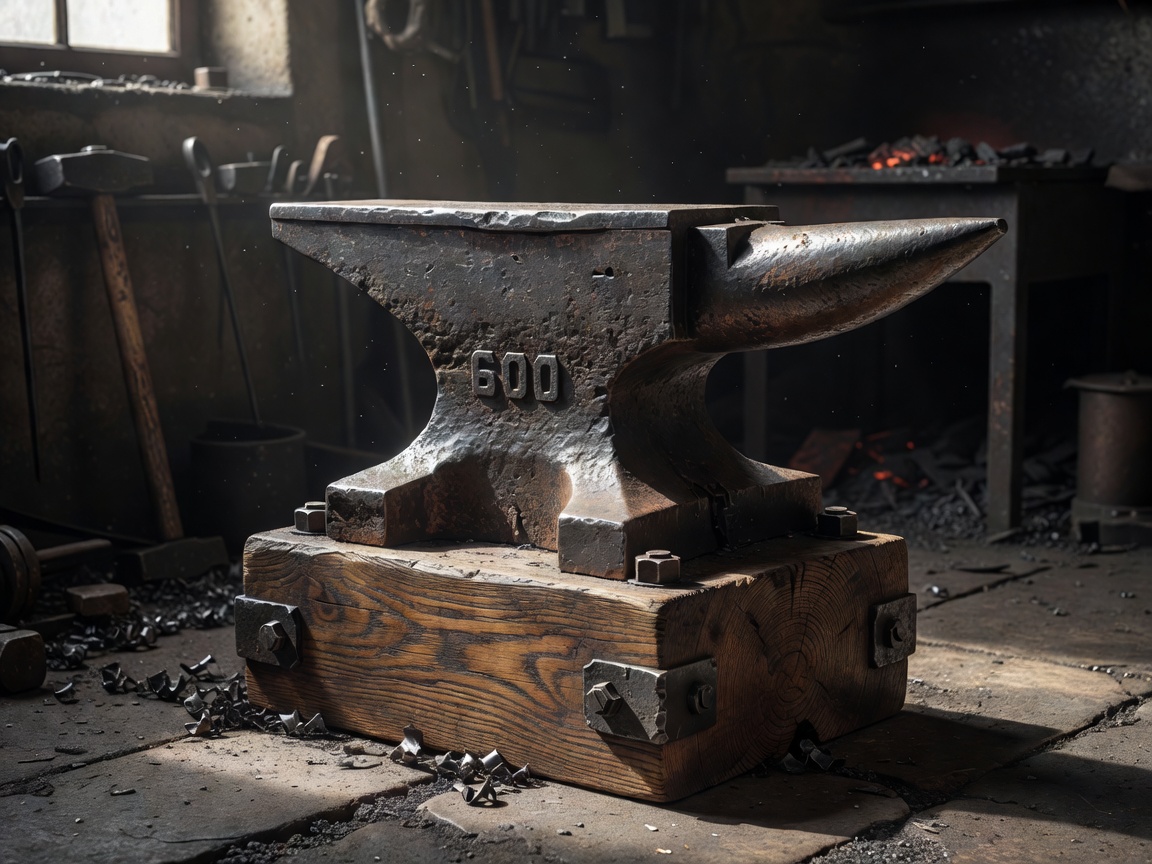
An anvil is an energy-management tool. Its face resists the hammer while the body and stand limit movement. A modest anvil mounted firmly can outperform a heavier one that rocks, rings excessively or places the work at an awkward height.
Mass and working scale
More mass generally means less energy lost through movement, but usable mass depends on the work. Small hardware, blades and light decorative elements can be forged on relatively compact anvils. Large sections and heavy striking benefit from a larger body and broader base. If an anvil must be moved regularly, portability may matter more than maximum weight.
Do not judge only by the face dimensions. A thick waist, sound base and concentrated mass beneath the face contribute to stability. Alternative anvils made from upright steel blocks or heavy sections can work well when they place substantial material directly below the striking area.
Face condition and edges
The face should be generally flat, but a used surface need not look new. Minor marks can be dressed if they transfer unwanted texture. Deep sway, extensive chipping, cracks or a separating hardened plate are more serious. Avoid aggressive grinding: removing hardened material can permanently reduce service life and change the face geometry.
Edges serve different purposes. A moderately crisp section helps form shoulders, while a radiused section reduces sharp stress concentrations and allows smooth drawing. Many smiths maintain several edge radii rather than making every edge equally sharp. Existing chips can sometimes be isolated from the primary working area, but welding repairs require appropriate expertise and heat control.
Rebound and sound
Rebound offers a broad indication of face resilience, but it is not a complete quality test. A clean steel ball dropped from a controlled low height may show differences across the face; eye protection is essential, and the ball must not become a projectile. Dead areas can indicate damage or construction differences. Never strike hardened steel with another hardened object to “test” an anvil, because fragments can break away at high speed.
A loud ring is not necessarily desirable and does not prove hardness. Stand design, floor structure and contact at the base alter sound considerably. Chains, magnets or resilient material between stand and base may reduce ringing, provided nothing creates instability or obstructs the work.
Hardy hole, pritchel hole and horn
The square hardy hole accepts bottom tools such as cutoffs, bending forks and swages. Measure it before making tool shanks, allowing clearance so hot scale cannot jam the tool. A shank should seat securely without bottoming out or wedging tightly. The round pritchel hole supports punching and provides an exit for slugs.
The horn supports curves and progressive bending. Its exact profile is less important if you use separate mandrels for precision work. Inspect the junction between horn and face, where old damage may be hidden beneath paint or filler.
Mounting height and stability
A common starting point places the face near knuckle height when standing naturally, but body proportions, hammer style and project scale justify adjustment. Too high encourages raised shoulders; too low promotes bending at the back. Test with temporary blocking before cutting a permanent stand.
Stumps, laminated timber stands and welded steel bases can all work. The stand needs a broad footprint, full contact with the floor and secure anvil restraint. Fasteners should prevent walking or tipping without creating projections that catch feet or hot stock. On concrete, resilient pads can reduce vibration, but thick soft material may introduce bounce.
Buying priorities
When comparing new and used anvils, include transport, stand materials and required repairs in the budget. Photographs alone rarely reveal face separation or rocking. Ask for clear views of the face, base and sides, along with dimensions and weight. If inspection is possible, prioritize sound structure and useful geometry over cosmetic finish.
An anvil should make accurate work easier. Choose enough mass for your stock, preserve the face, radius edges deliberately and spend time on the mounting. Stability is often the least expensive performance improvement available.