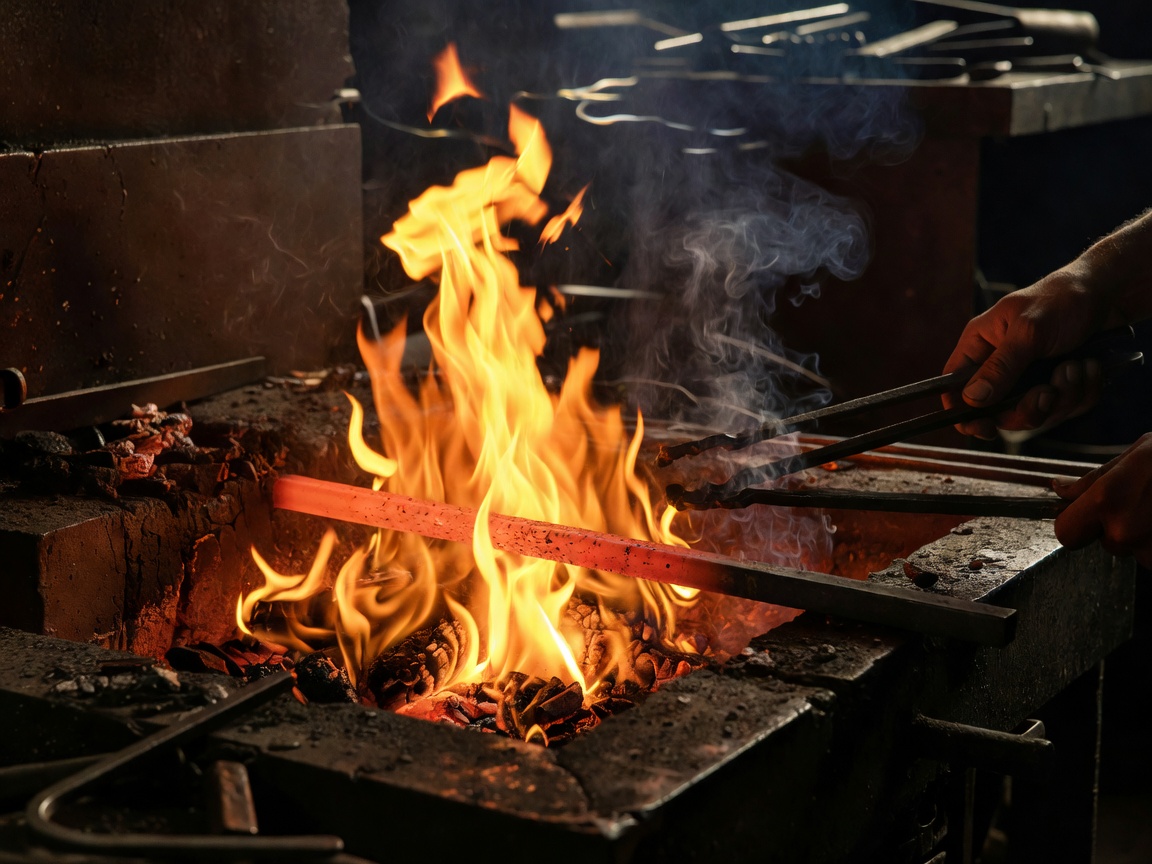
Propane, coal, coke and charcoal can all heat steel to forging temperature. They differ in startup, local availability, fire management, ventilation demands and the shape of the hot zone. Choose around your projects and premises rather than tradition alone.
Propane: repeatable and convenient
A well-designed propane forge gives a relatively even chamber temperature and starts quickly. It suits short sessions, repeated small parts and workshops where solid-fuel smoke would create problems. Burner output, chamber volume, insulation and openings must work together. An oversized opening wastes heat; damaged refractory exposes insulation and should be repaired before use.
Propane simplifies fire tending, but it is not maintenance-free. Connections should be checked with an appropriate leak-detection solution, cylinders must remain upright and combustion requires substantial fresh air. A carbon-monoxide alarm is an important secondary warning, never a substitute for ventilation. Keep cylinders away from heat and follow local rules governing storage and regulators.
Coal and coke: a controllable local fire
Bituminous blacksmithing coal can form a compact coke fire around the work. Fresh coal is placed around the perimeter, where heat drives off volatile compounds before the resulting coke moves toward the center. This allows a skilled operator to create a deep, focused hot zone and heat one section while leaving nearby material cooler.
Coal quality varies. High ash or clinker-forming fuel interrupts airflow and demands more cleaning. Smoke during coking makes an effective hood and chimney essential. Coke burns with less smoke than raw coal and removes the coking step, but small pieces may fall through a coarse fire grate and availability can be inconsistent.
Charcoal: clean fuel with high volume
Lump charcoal can produce forging and welding heat with sufficient air. It contains little sulfur and responds rapidly to the blower. Its disadvantages are bulk, rapid consumption and flying sparks. Pieces should be large enough to maintain a deep fire without blocking airflow. Briquettes often contain binders and create more ash, so untreated lump charcoal is generally easier to manage.
Airflow and atmosphere matter
More air does not automatically mean better forging. Excess blast can oxidize the steel rapidly, scatter fuel and create a harsh fire. Too little air lengthens the heat and may produce incomplete combustion. In a solid-fuel forge, keep the work surrounded by fuel rather than directly in the oxygen-rich blast. In a gas forge, burner tuning should produce stable combustion without flames lifting from the burner or burning back inside it.
Scale formation is a useful signal. Some scale is normal, but heavy flaking suggests long exposure, excessive oxygen or unnecessarily high temperature. Shorter heats, a properly sized hot zone and prepared tooling all reduce time spent waiting with steel in the fire.
Operating cost and selection
Fuel price alone is a poor comparison because forge efficiency and local supply dominate consumption. Include ventilation installation, refractory maintenance, storage, cleanup and the value of setup time. A small propane forge may be economical for occasional hooks and tools, while a solid-fuel forge can be more flexible for awkwardly shaped work or highly localized heating.
Before buying, confirm whether open flames, compressed gas or smoke-producing equipment are permitted at the property. Then select the smallest forge that comfortably accepts intended stock. Smaller heated volume is usually easier to control, but openings must not trap expanding stock or force unsafe handling.
A reliable firing routine
- Clear combustibles, inspect fuel equipment and confirm ventilation.
- Prepare stock, tools and a safe landing place before ignition.
- Establish a stable fire before introducing the work.
- Heat only the section needed and watch the steel, not the clock.
- Shut down according to the forge type and monitor residual heat.
The best fuel is the one you can source consistently, operate legally and manage with concentration. Good fire control saves more steel and time than pursuing maximum temperature.